Insurance Agency CRM: Best Platforms Compared for 2026
This article gives you a direct comparison of the top insurance agency CRM platforms for 2026, explains what features actually matter (and which ones are just marketing), and helps you match the right system to your agency's size and product mix before you waste another quarter on a tool that doesn't fit how you actually sell.
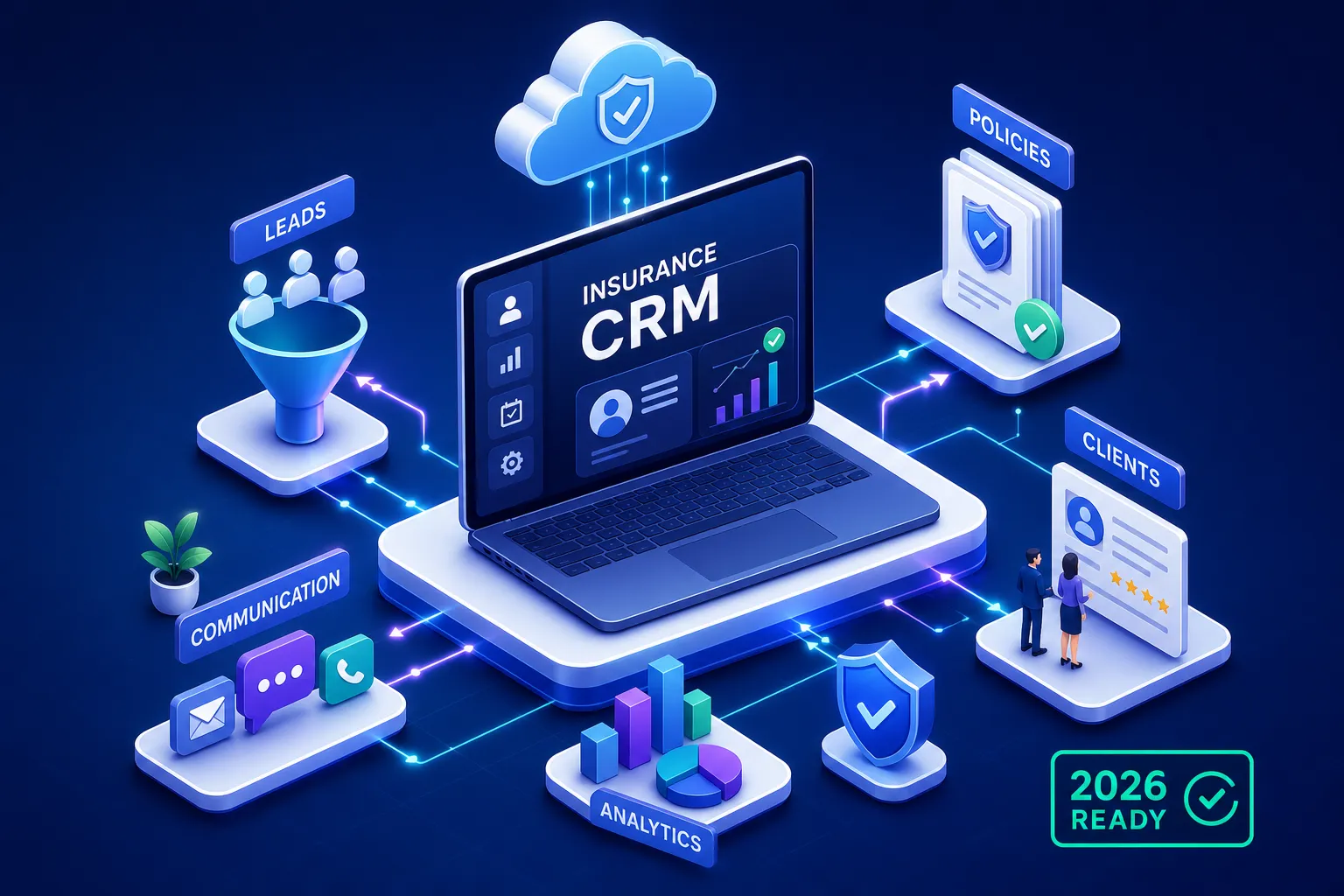
Many insurance agencies are running an insurance agency CRM that was designed for a SaaS sales team. The pipeline stages read "Lead, Qualified, Proposal, Closed." There's no suitability review stage. No issued-not-taken follow-up. No renewal automation tied to policy dates. The result is predictable: leads die in limbo, follow-up is manual and inconsistent, and automated messaging runs without compliant consent flows, which creates real liability.
At VELO, we've observed this breakdown repeatedly across agencies of every size. The tool isn't the problem. The mismatch is.
This article gives you a direct comparison of the top insurance agency CRM platforms for 2026, explains what features actually matter (and which ones are just marketing), and helps you match the right system to your agency's size and product mix before you waste another quarter on a tool that doesn't fit how you actually sell.
What a real insurance agency CRM must do differently
This isn't about dropping a few custom fields into a generic sales tool. Insurance agencies operate under compliance constraints, manage multi-line product complexity, and run longer sales cycles than most B2B software companies. A tool built for shorter B2B sales cycles is structurally wrong for an annuity pipeline that can stretch well past 90 days and requires a formal suitability review.
Compliance-safe automations that won't expose your agency
TCPA rules for SMS are specific and unforgiving. Under the FCC's rules effective in 2026, each agency must obtain its own direct consent from each contact. Consent gathered through a third-party lead form cannot be shared or recycled across downstream businesses. Every automated marketing text requires prior express written consent, and that consent must explicitly state that messages are automated, name your agency, and include opt-out instructions. Per FCC and TCPA guidance, violations carry fines ranging from $500 to $1,500 per message, with no grace period for ignorance.
A properly configured CRM for insurance handles this at the system level: consent capture on every lead form, time-of-day enforcement (8 AM to 9 PM local time), automated opt-out suppression across the entire contact database, and message archiving for audit purposes. If your current setup doesn't have all four of those in place, your automation is a compliance risk, not an asset. For a practical checklist on meeting those requirements, see this SMS marketing compliance guide for 2026.
Pipeline stages that reflect how annuity deals actually close
Agencies with strong close rates build their CRM pipeline around the actual sales motion: Lead Capture, Qualification, Needs Assessment, Illustration Sent, Suitability Review, Carrier Submission, Issued, and Issued-Not-Taken Follow-Up. Each stage has its own automation triggers, task assignments, and communication cadences. When the pipeline architecture doesn't match reality, deals fall through the cracks between stages that don't exist in the system.
Lead routing by product line
A Medicare lead and a P&C lead arriving from two different campaigns need to go to two different agents or queues, automatically. A single generic pipeline with one routing rule fails multi-line agencies immediately. The CRM needs conditional logic that reads the lead source, the product of interest, or the campaign origin and assigns accordingly. Without that, routing becomes manual, and manual means delayed.
CRM vs. AMS: the distinction most agencies get wrong
Many agencies approach this decision by shopping for "a CRM" when they actually need to understand where a CRM ends and an Agency Management System begins. Confusing the two leads to either paying for AMS functionality you don't need or buying a broker CRM that can't touch the data that matters most to your operation. For a clear explainer of the difference, read this comparison of insurance CRM vs. agency management system.
What an AMS actually handles
An Agency Management System is the operational backbone. It handles policy issuance, carrier connectivity, commission downloads, certificate management, ACORD form processing, and compliance documentation. Platforms like Applied Epic, Vertafore AMS360, and the AMS layer inside AgencyBloc live here. This is not a sales pipeline tool. It's a system of record for the policies your agency already manages, a dedicated policy management CRM layer that sits outside the pre-sale relationship workflow.
Where a CRM takes over
The CRM owns the pre-sale and post-sale relationship layer: lead capture, pipeline stages, follow-up sequences, renewal outreach, and cross-sell workflows. Most agencies need both systems running in tandem, connected through a native integration or a custom API build. The mistake is buying one tool and expecting it to do everything well. When an AMS tries to be a CRM, the sales workflow suffers. When a generic CRM tries to be an AMS, the policy data never makes it in.
Top insurance agency CRM platforms for 2026
The goal here is not a ranked list of ten platforms. It's a practical shortlist organized by who the tool actually fits. Buy by use case, not by feature count.
Best for independent agencies: EZLynx and AgencyBloc
Both platforms were built by people who understood books of business. EZLynx offers strong carrier connectivity and quoting automation, making it a natural fit for agencies where speed-to-quote is a competitive edge. AgencyBloc is purpose-built for life, health, and benefits agencies, with native renewal automation for insurance that triggers reminders at 90, 60, and 30 days pre-renewal, built-in commission tracking by carrier and line, and direct integration with Medicare enrollment tools.
AgencyBloc runs $109 to $169 per user per month and requires an annual contract. That pricing is justified if you're actually using the native features, but if you're not, you're paying for a configured system that's still sitting idle.
Best for agencies that need enterprise depth: Salesforce FSC and Creatio
Salesforce Financial Services Cloud gives you household mapping, AI-powered risk prediction, and 360-degree client views at $325 to $750 per user per month. It also requires dedicated technical resources and a three-to-six-month implementation runway to reach its potential. Creatio offers comparable depth for large operations, including full claims lifecycle management and underwriting tools, at roughly $25 per user per month with modular add-ons. Both platforms are capable. Both demand serious configuration investment before they're useful to a working agency.
Best for small or budget-conscious agencies: Zoho CRM and Nutshell
Zoho runs $14 to $52 per user per month and Nutshell starts at $13 per user per month, with plans up to $79. Neither is purpose-built for insurance, but both can be configured for a single product line pipeline, basic renewal workflows, and lead tracking without the cost of a specialized platform. Nutshell earns strong user ratings on G2 for ease of use and customer support. Zoho offers the broadest integration catalog at this price point. The tradeoff is that everything insurance-specific requires custom configuration, which brings us to the most important variable in this entire decision.
Integrations that actually matter during vendor selection
Every CRM vendor will tell you they integrate with everything. That answer is meaningless during a sales demo. The integrations that determine whether your agency's data actually flows are specific, and they're often the ones that break first.
Carrier portals and AMS handoffs
EZLynx and AgencyBloc offer native carrier connectivity. Salesforce has a native integration with Applied Epic through an official product called "Applied Epic for Salesforce." For most other CRMs, including HubSpot, Zoho, and GoHighLevel, carrier data requires a custom API build or middleware. Third-party automation bridges for carrier data can be fragile in complex integrations: they may fail when a field mapping changes, when an API version updates, or when volume spikes. Build your core data flows on native integrations or direct API connections where possible. Read more about the Applied Epic and Salesforce integration here: Applied Epic for Salesforce integration.
Quoting tools, raters, and Medicare platforms
For multi-line agencies, the CRM needs to either integrate with your rater or pass lead data cleanly into your quoting workflow without manual re-entry. AgencyBloc handles Medicare enrollment tools natively. Most other platforms require middleware or a manual handoff. Know exactly what your quoting workflow looks like before you sign anything.
Questions to ask every vendor before you sign
-
What is the native integration with my specific AMS, and how does policy data sync back into the CRM?
-
Can renewal automation trigger without a manual status update from an agent?
-
Who owns the integration when it breaks, and what is the documented SLA for fixing it?
-
How does your platform handle TCPA consent capture, opt-out suppression, and message archiving?
If a vendor can't answer the third question with specifics, that integration is unsupported. You'll own the debugging when it fails.
How to match the CRM to your agency size and product mix
The most common mistake in this decision is buying a platform based on its biggest features rather than your actual workflow. A solo Medicare agent and a 20-person P&C brokerage have completely different requirements. Over-buying creates complexity no one manages. Under-buying creates gaps that compound over time.
Solo agents and small shops (under 5 producers)
Speed to value is the priority. A configured Zoho CRM or Nutshell build for a single product line can typically be live within two to four weeks depending on complexity. The goal is a clean pipeline, consistent follow-up, and renewal reminders that fire automatically. Do not buy Salesforce FSC if you don't have a dedicated admin to manage it. The platform cost is the smallest part of the total expense.
Mid-size agencies with multiple product lines (5 to 25 producers)
This is where platform choice intersects directly with implementation quality. AgencyBloc's native features become genuinely valuable at this scale. A properly configured GoHighLevel or HubSpot build, with separate pipelines by product line, routing rules by source, and multi-step nurture sequences, also works well here. At this size, the deciding factor isn't which platform you pick. It's how well the system is built and whether the logic actually matches how your team sells.
Why implementation quality determines whether any CRM actually works
Platform choice matters, but configuration logic determines the outcome. Most agencies buy the right tool and then set it up wrong, either by doing it themselves or by hiring a generalist who doesn't know insurance workflows. A CRM for insurance agents or a broker CRM only delivers results when the underlying build reflects how your producers actually work.
The hidden cost of a misconfigured setup
A misconfigured insurance agency CRM creates specific, measurable damage. Leads get assigned to the wrong agent because routing rules don't account for product line. Renewal sequences fire with non-compliant messaging because no one set up consent gating. Pipeline stages don't map to the actual sales motion, so deals sit in the wrong stage for weeks. These are not edge cases. They're the default outcome of a DIY deployment or a generic implementation partner who has never built an annuity pipeline.
How VELO deploys a compliant, production-ready insurance agency CRM
VELO builds CRM pipelines exclusively for regulated industries: insurance, real estate, and financial services. Our deployment model covers the full stack: TCPA-compliant consent capture, annuity and policy pipeline stages that match how deals actually close, product-line routing rules, multi-step email and SMS nurture sequences with behavioral triggers, and a unified attribution dashboard that tracks cost-per-qualified-lead and close rate from day one. We work across GoHighLevel, HubSpot, AgencyBloc, Salesforce, and ActiveCampaign, and we recommend the right platform for your workflow, not the one we have an incentive to push.
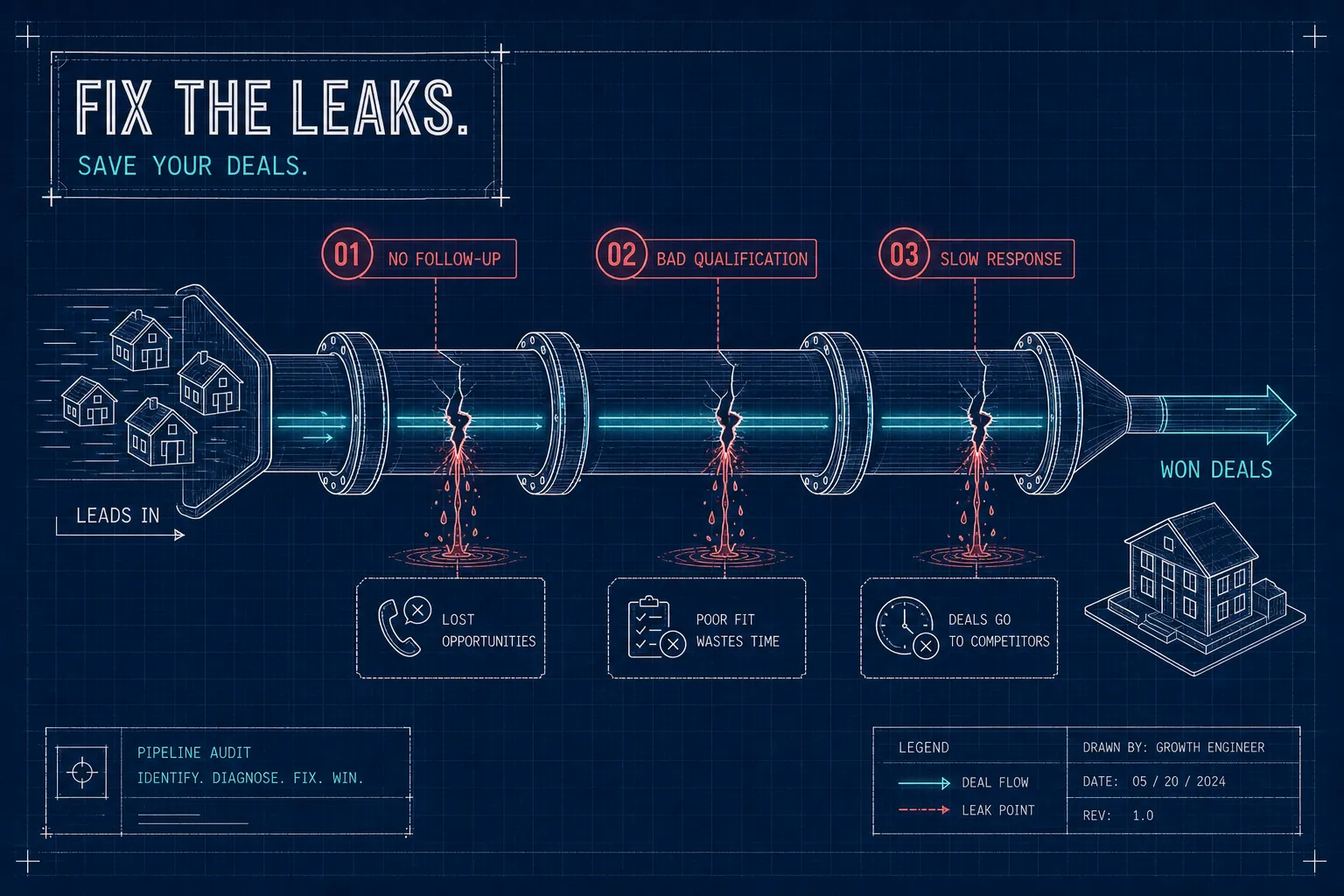
If you're not sure whether your current setup is working or bleeding leads, the fastest way to find out is a 30-minute pipeline audit. We identify the highest-leverage gaps in your current system and deliver a written roadmap at no cost. You'll know exactly what's broken and what to fix before you commit to anything.
Choosing an insurance agency CRM for your team
The best insurance agency CRM is the one configured correctly for how your agency actually operates, not the one with the most impressive demo. Know your agency size, your primary product lines, and your compliance exposure before you evaluate platforms. AgencyBloc fits independent life and health agencies that want native functionality out of the box. Salesforce FSC fits large operations with technical resources and enterprise requirements. Zoho and Nutshell fit smaller shops that need a clean, affordable foundation. And if you're mid-size with multiple product lines, implementation quality is the variable that separates a system that drives revenue from one that collects dust.
If you have an insurance agency CRM you're barely using, thousands of dormant contacts, and no clear attribution data, that's not a platform problem, that's a configuration problem, and it's fixable. Start with an honest audit of where your pipeline is leaking, and build from there. Book your free pipeline audit with VELO to evaluate your insurance agency CRM setup and get a written roadmap at no cost. No pitch deck. Just clarity on what's broken and how to fix it.