How Marketing Agencies Can Offer CRM Setup Services
The challenge most agencies face is execution. Building an internal CRM team from scratch takes months and significant overhead. That's why agencies partnering with technical fulfillment partners like VELO can launch this service without adding headcount. By the end of this article, you'll know how to price, package, deliver, and hand off CRM projects under your own brand.
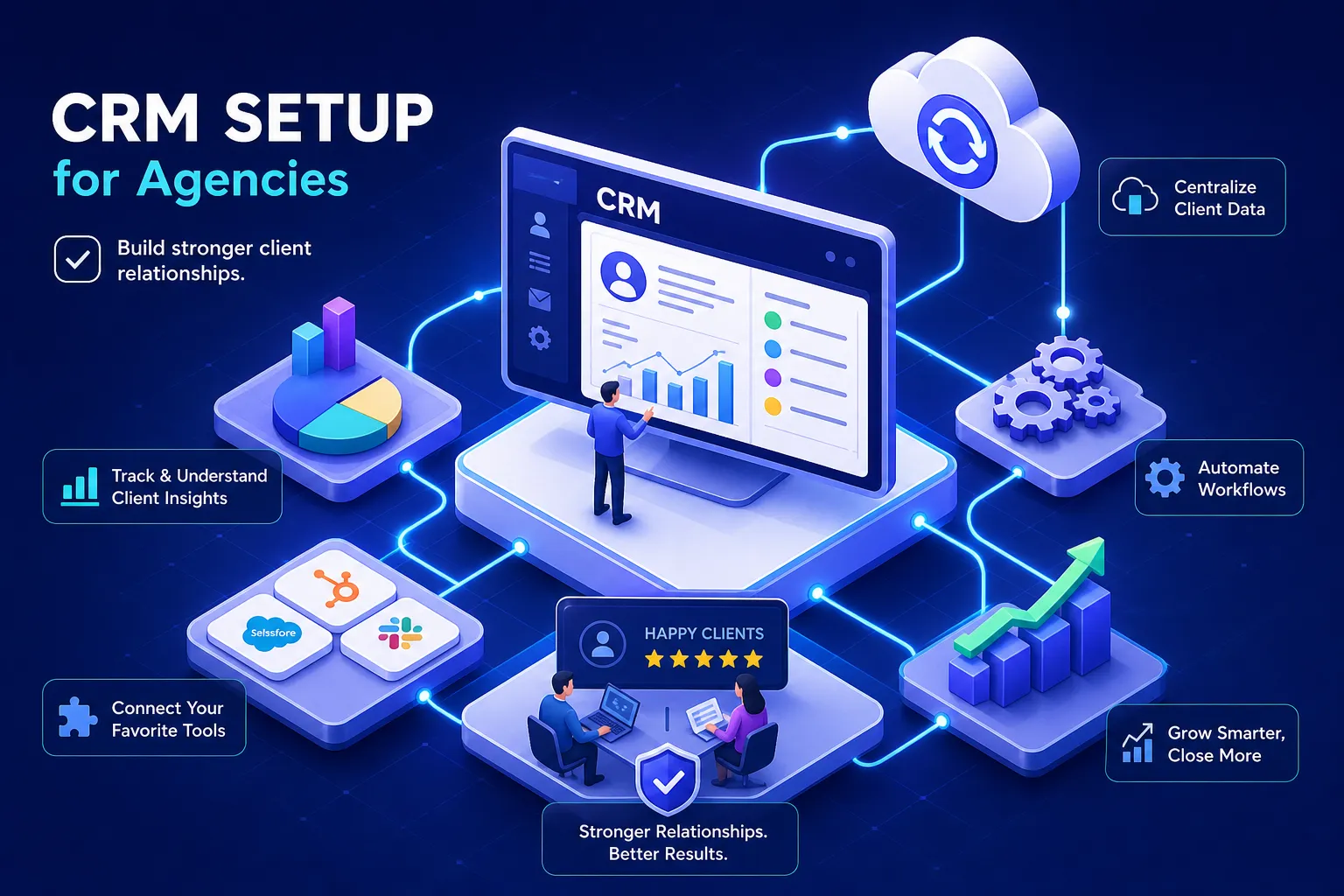
Understanding how marketing agencies offer CRM setup to clients starts with recognizing the gap most agencies leave open. They run ads, drive leads, and hand the client a spreadsheet of contacts with no system to close them. That gap is a missed revenue line hiding in plain sight, and more agencies are starting to notice it.
CRM setup is becoming a practical service extension for agencies that want stickier client relationships and higher monthly contract value. Clients who rely on your agency for both lead generation and the system that converts those leads are difficult to replace. The stickiness is structural: when your agency manages both sides of the funnel, replacing you means dismantling core business infrastructure, not just switching ad vendors.
The challenge most agencies face is execution. Building an internal CRM team from scratch takes months and significant overhead. That's why agencies partnering with technical fulfillment partners like VELO can launch this service without adding headcount. By the end of this article, you'll know how to price, package, deliver, and hand off CRM projects under your own brand.
Why CRM setup is the service line most agencies overlook
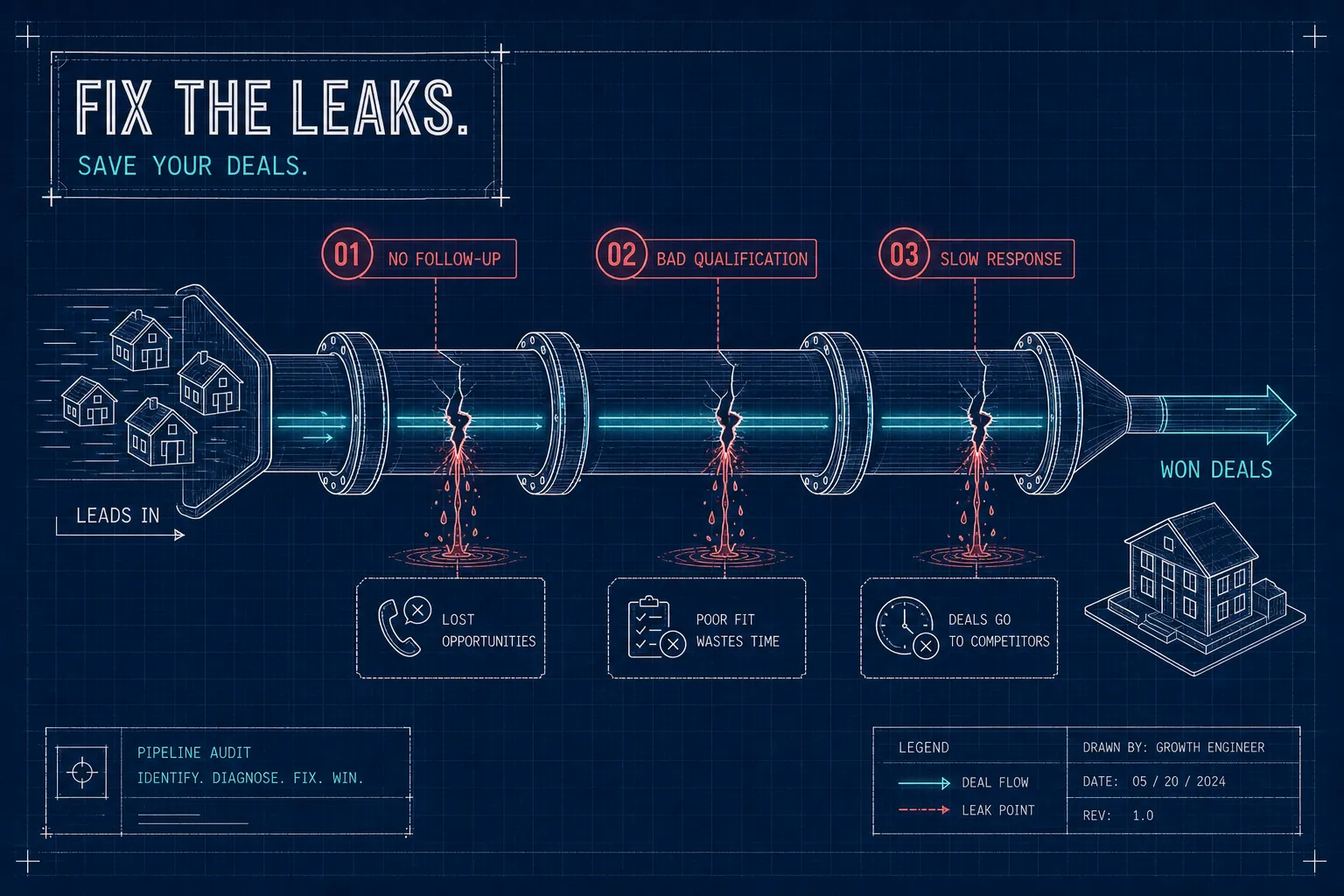
Many agencies own the top of funnel for their clients. They control the ads, the landing pages, and the form fills. But the moment a lead submits that form, the agency's visibility ends. What happens next, whether a sales rep calls within five minutes or the lead sits untouched for three days, is entirely outside their view. That blind spot is where revenue disappears.
The telling detail is that most clients never ask for "CRM implementation." They ask why their leads aren't converting, why their sales team keeps missing follow-ups, or why they can't tell which ad drove a closed deal. Those are CRM problems. When a client raises any of those questions, they're describing a gap your agency could fill. Agencies that recognize this framing stop being a vendor and start being a revenue partner.
The retention math makes this even more compelling. A client on a monthly ad retainer cancels when ROI dips. A client on a CRM management retainer stays because the system is embedded in their daily business operations. Adding CRM management creates a natural second recurring line, monthly support, automation audits, and campaign builds that renew because the client can't easily walk away from a system they depend on every day.
How Marketing Agencies Offer CRM Setup to Clients: Packaging and Pricing
The most practical packaging structure uses three tiers. A Starter package at around $3,000 per month covers core CRM setup, basic pipeline configuration, and standard lead management. A Growth tier at approximately $7,500 per month adds optimization, analytics, reporting, and more complex automation. A Premium package at $15,000 per month delivers comprehensive strategy, dedicated senior support, and priority access. Each tier should have a clear upgrade path so clients naturally move up as their needs evolve.
Keeping the Starter tier productized and templated is what makes delivery margins healthy at the bottom of the range. That discipline also makes it easier to train a fulfillment partner or new team member on delivery without custom-scoping every engagement from zero.
Project-based pricing works well for clients who need a system stood up once, without ongoing management. One-time CRM builds typically run between $5,000 and $50,000 depending on complexity, with milestone-based payments structured as 50% upfront and 50% on completion. Monthly retainers between $2,500 and $20,000 make more sense when ongoing campaign management, A/B testing, and monthly audits are part of the scope. For results-driven clients focused on metrics like cost-per-qualified lead, a hybrid model combining a base monthly fee with a performance bonus aligns incentives on both sides. For additional benchmarking and to validate tier pricing against market norms, refer to this CRM pricing guide for decision-makers.
The most common structure for mid-market clients is a one-time automation build fee between $5,000 and $20,000 combined with ongoing management at $1,500 to $3,000 per month. Every package should anchor on core deliverables: discovery and audit, data migration, pipeline configuration, automation setup, and training. These are the deliverables clients can understand and evaluate, and they're what justify the price.
A Delivery Framework That Makes Every CRM Build Repeatable
The biggest mistake agencies make on their first CRM project is treating it as a custom engagement. Every implementation should follow the same five-phase process, customized in content but not in structure. That discipline is what keeps delivery costs predictable and margins healthy at scale.
Phase 1 and 2: Discovery, Data Cleanup, and Pipeline Configuration
Start with a structured onboarding questionnaire, not open-ended email threads. The questionnaire should capture the client's existing tools, pipeline stages, lead sources, and the daily actions each user performs. Map decision-makers and daily users separately. They have different needs and different tolerance for complexity. Before any data enters the new CRM, export the existing contacts, delete duplicates, standardize phone and email formats, and remove dead records that will never generate activity. Clean data is non-negotiable. A CRM populated with garbage contacts produces garbage reporting.
Pipeline configuration comes next. Build the stages to mirror the client's actual sales process, from new lead to booked, completed, and paid. Add custom fields for lead source, service type, and any compliance-relevant data points specific to their industry. The goal is a system the team recognizes as their own workflow, not a generic template they have to adapt around every day.
Phase 3 and 4: Integrations, Automations, and Team Training
Connect the calendar so booking checks live availability automatically. Connect the phone line so calls log against the correct contact record. Connect the payment processor so invoices and receipts attach where they belong. For clients running paid ads on Meta or Google, connect those lead sources directly so inbound leads populate the CRM without manual entry. Each integration removes a human step that would otherwise create data gaps and follow-up failures.
Automation sequences should cover the core scenarios: opened but didn't book, clicked but didn't respond, no-show after appointment, and abandoned inquiry. Train the team on the daily workflow, not the full feature list. Focus training on four actions: finding a contact, logging a call, booking an appointment, and sending an invoice. Teams that learn four things thoroughly adopt the system. Teams that receive a feature-by-feature walkthrough revert to spreadsheets.
Phase 5: Go-Live Testing and the CRM Deployment Checklist
Run a structured go-live check before handing the system to the client. Place a test call, book a test appointment, and send a test invoice. Confirm each action lands on the correct contact record. Only publish the booking widget and activate automations once every test passes without error. This step catches configuration issues before they create real problems with real leads. Document every configuration decision in a reference guide the client's team can access independently. That documentation is part of what they're paying for, and it reduces your support burden after handoff. For practical onboarding steps and a client-facing checklist you can adapt, see this client onboarding guide.
Realistic Timelines, SLAs, and What Clients Should Expect
Setting honest expectations at the proposal stage prevents scope creep and protects the relationship. Small business engagements with one to three users and a simple pipeline typically complete in one to three months, requiring between 150 and 300 billable hours. Mid-market clients with multiple departments, integrations, and data migration run three to six months and 400 to 800 hours. The three-to-six-month window is the safest range to quote for standard CRM projects in most proposals.
Contracts should define deliverables and acceptance criteria in plain language, with milestone-based payment terms and explicit data ownership language. The client should know from day one that their data belongs to them regardless of contract status. SLAs should commit to specific response times by support tier rather than vague "business day" language. That specificity builds trust and reduces friction when issues arise.
After go-live, structure support as a separate retainer from the implementation engagement. Tier 3 support covering escalated issues, integration failures, and performance troubleshooting is a distinct offering from day-to-day campaign management. A solid monthly CRM management retainer typically includes at least one audit, one campaign build, and direct async access, a useful starting point when scoping what ongoing support actually covers. Agencies that bundle CRM management into the same retainer as ongoing ad management create an account that's genuinely difficult to cancel, because canceling means losing two critical systems at once.
How White-Label CRM Delivery Lets You Scale Without Hiring
White-label CRM delivery means the agency sells and owns the client relationship while a technical fulfillment partner executes the build under the agency's brand. The client sees one team, one point of contact, and one set of deliverables. The agency never needs to hire a CRM architect, automation specialist, or data migration expert. The margin math works because the agency prices the service at market rate and pays the fulfillment partner a wholesale rate for execution.
This is the model VELO is built to support. For agency partners, VELO functions as the technical engine, handling discovery documentation, pipeline configuration, automation builds, integration setup, and go-live testing across platforms including GoHighLevel white-label CRM, HubSpot, ActiveCampaign, Follow Up Boss, and Salesforce. The agency receives fully documented SOPs it can hand directly to clients, keeping the relationship and the recurring revenue entirely under the agency's brand. In a standard white-label arrangement, the fulfillment partner operates invisibly unless the agency decides otherwise, that's a contractual detail worth confirming with any partner before launch.
From the client's perspective, nothing changes. They onboard with the agency, complete the discovery questionnaire, receive a configured CRM, and get trained using materials the fulfillment partner provides. The communication flow is straightforward: the agency manages the client relationship and relays requirements; the technical partner builds and documents; the agency presents and trains. The only difference is the agency didn't need to hire three people to deliver it, and their margins reflect that efficiency from the first engagement.
How to Go to Market and Land Your First CRM Client
The easiest first CRM client is already paying your agency for ads or content. Look through your current book of business for clients who mention lead follow-up problems, ask about attribution, or run high-volume inbound campaigns without a CRM system in place. Industries that generate high lead volumes but often lack system maturity, think insurance agencies, real estate teams, and financial services firms, tend to feel this pain acutely. They just haven't connected it to a solvable problem yet.
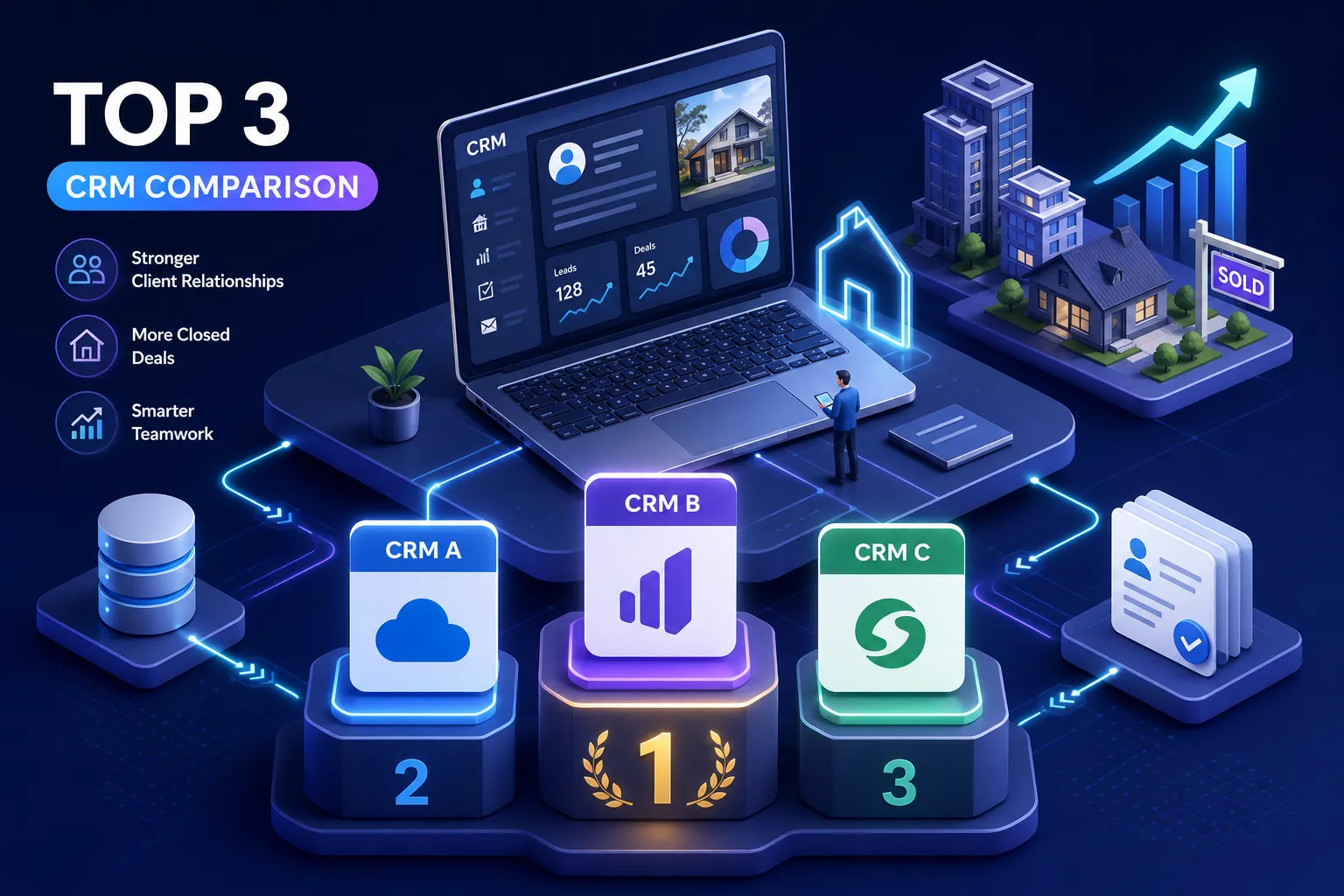
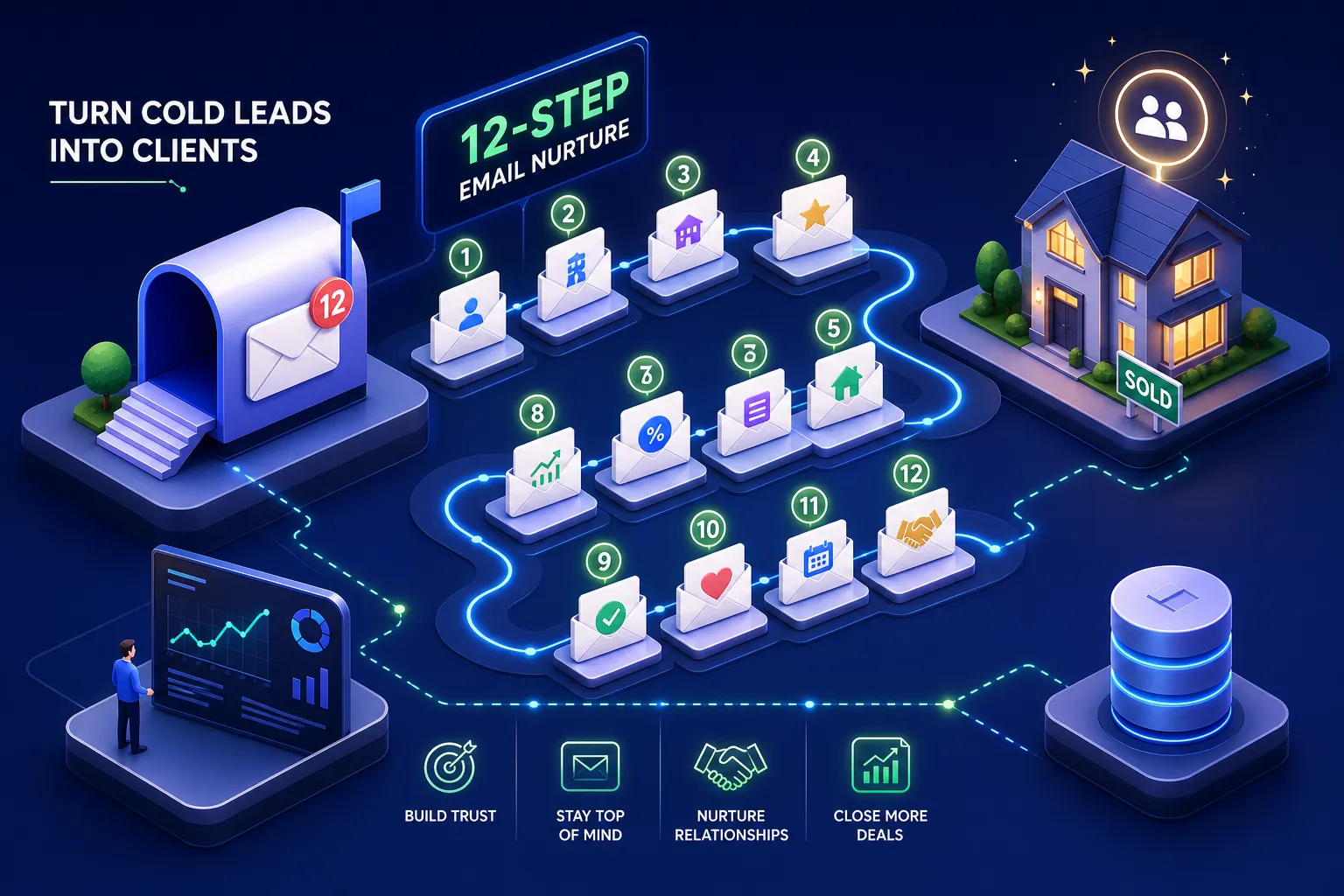
Don't pitch "CRM implementation." Pitch the outcome: "We'll build you a system that follows up with every lead within five minutes, tells you which ad drove your last ten clients, and keeps cold leads warm for the next twelve months." Lead with the revenue problem the system solves, not the platform it runs on. The platform is a detail. The closed deals are the story. If you need help comparing platforms and features, this roundup of the best CRMs for marketing agencies is a practical starting point for agency decision-makers.
A free 30-minute pipeline audit is a low-friction entry point. Walk the client through where their leads are falling out of the funnel and deliver a written summary that identifies their highest-leverage gaps and a roadmap to fix them. This works as an entry tactic because it delivers real value before asking for any commitment. It also positions your agency as the expert who already understands their system better than they do, the fastest way to earn the trust required for a meaningful engagement.
The Service Line Worth Building
This is how marketing agencies offer CRM setup to clients: by packaging the service into clear tiers, following a repeatable five-phase delivery framework, and using white-label fulfillment to execute without building an internal technical team. The three-tier pricing model gives you a structure to take directly into a proposal. The five-phase framework covers discovery through go-live. Neither requires a large internal team to execute.
You don't need to build a CRM practice from scratch to offer this service. VELO works as a white-label fulfillment partner that agencies can activate to handle the technical build while you own the relationship and the revenue. If you want to see where your current clients are losing leads and what a CRM system would fix, reach out to VELO about a free 30-minute pipeline audit. That conversation is the right first step for any agency ready to add CRM setup to their service line and stop leaving that revenue on the table.