Best CRM for Financial Services: Top Platforms Compared
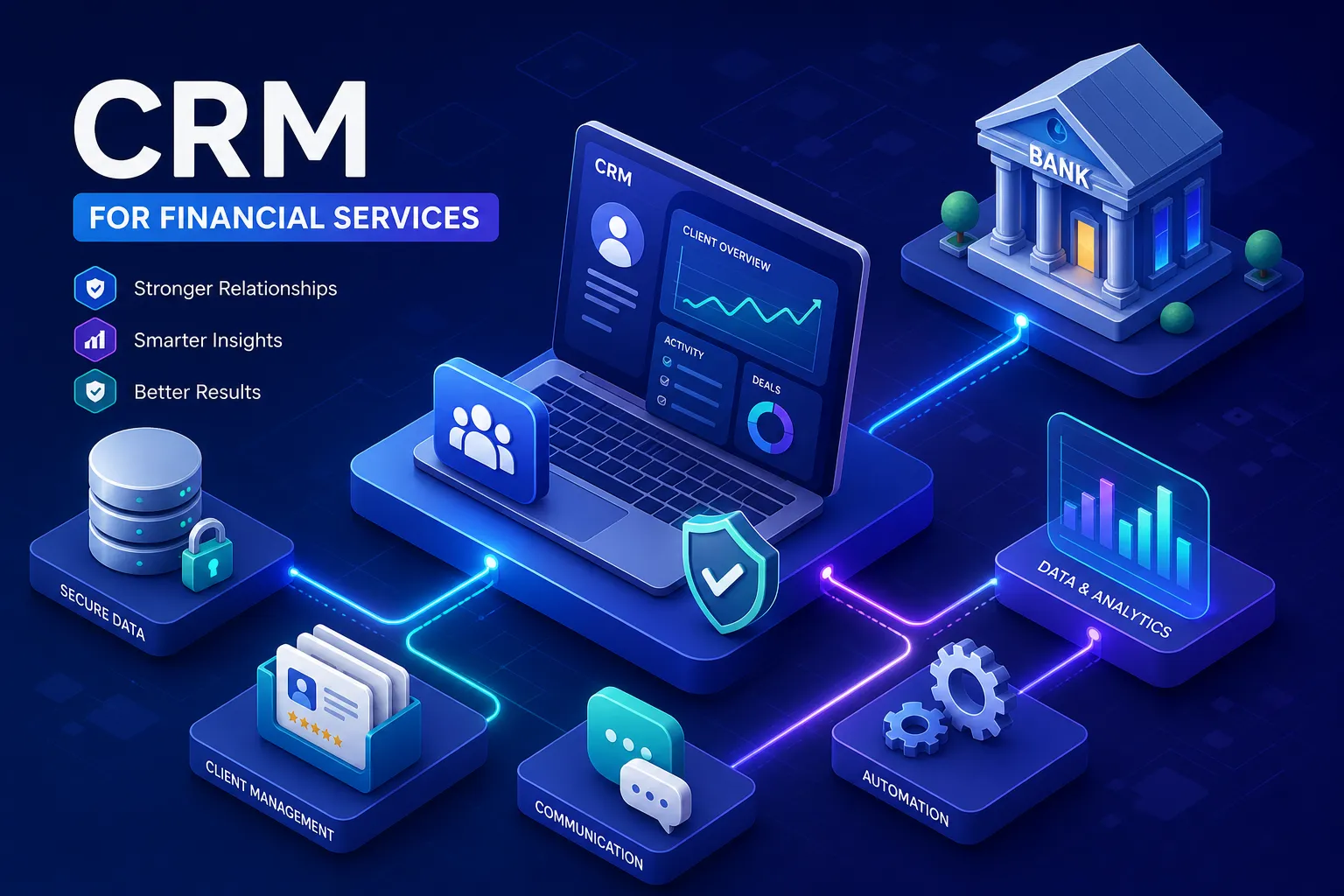
The right financial services CRM isn't just software. It's the infrastructure that determines how fast a lead becomes a consultation, how clean your audit trail looks when regulators ask questions, and whether your team can follow up at scale without manually managing every touchpoint.
Choosing the right financial services CRM is one of the most consequential decisions an advisory firm or RIA will make, and many firms get it wrong. They evaluate features on a demo call, buy the one with the nicest dashboard, and spend the next six months discovering it wasn't built for their workflow, their compliance environment, or the way leads actually move through their pipeline. The result can be poor data quality and low user trust, an expensive contact list that nobody acts on.
The right financial services CRM isn't just software. It's the infrastructure that determines how fast a lead becomes a consultation, how clean your audit trail looks when regulators ask questions, and whether your team can follow up at scale without manually managing every touchpoint. This guide covers what separates a purpose-built financial services CRM from a generic one, compares the top platforms by sub-sector, breaks down real implementation costs, and shows you what a compliant, operational setup actually looks like.
What sets a financial services CRM apart from a standard one
The compliance environment in financial services is fundamentally different from every other industry. SEC Rule 204-2 requires RIAs to preserve all electronic business communications in a non-rewriteable format for a minimum of five years, with the first two years readily accessible. TCPA rules govern every automated call and SMS your team sends to prospects; email outreach falls under separate regulations including CAN-SPAM and applicable state laws. KYC and AML workflows need to be documented and auditable. A CRM built for a SaaS company doesn't account for any of this. A CRM built for a registered investment advisor does.
Generic CRMs, even popular ones, require significant configuration or third-party overlays to meet these standards. That's not a knock on those platforms; they were built for different use cases. The problem is that many financial services firms don't discover the compliance gaps until they're well into an implementation and facing a configuration project that nobody budgeted for.
Pipeline visibility is the second major differentiator. Financial services pipelines aren't linear. A prospect attends a seminar, receives a follow-up email, books a discovery call, goes cold for three months, re-engages after a life event, and finally books a consultation. That cycle can stretch across many months, and every stage needs to be visible, triggered, and tracked. A CRM that can't reflect this kind of relationship-driven pipeline won't serve a financial services team the way it needs to.
Contact management architecture matters more than most firms realize at setup time. RIAs managing hundreds of client households need data models that map beneficiaries, joint accounts, and referral sources as connected entities, not just separate contact records. The decisions you make about data architecture on day one determine how useful your CRM for financial advisors becomes three years from now.
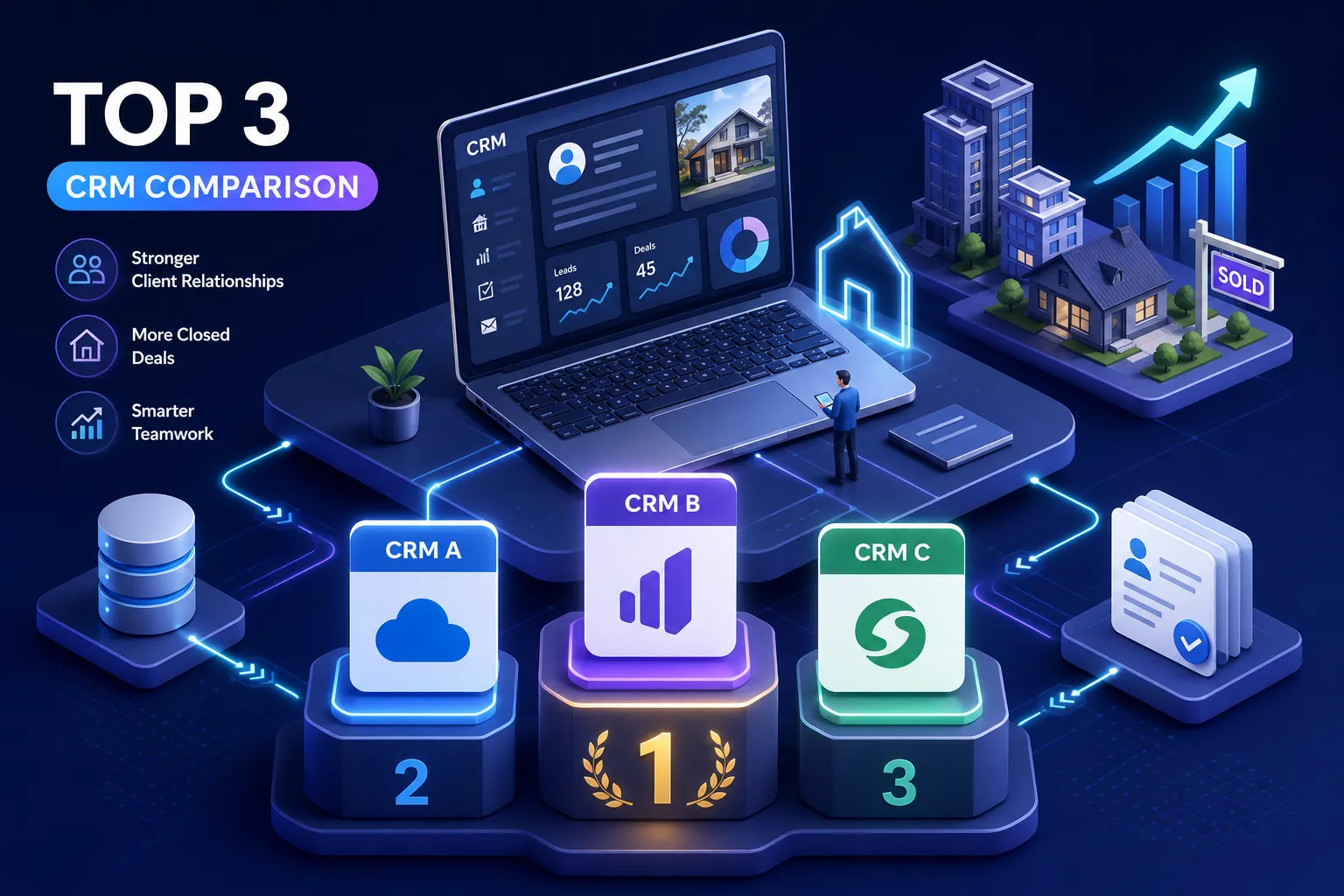
The top financial services CRM platforms for 2026
Salesforce Financial Services Cloud
Salesforce Financial Services Cloud is the leading choice for large wealth management firms and enterprise banks. Its Actionable Relationship Center visualizes multi-generational household relationships in a way few platforms can match for enterprise-scale complexity. You get 360-degree client views, Agentforce AI for lead qualification and scheduling, and over 5,000 AppExchange integrations. The power is real. So is the cost: $325 to $700 per user per month, with implementation fees that can reach $200,000 or more for the most complex builds. For enterprise firms where the ROI justifies it, Salesforce-cited case data shows that wealth advisory firms have reported 15% retention increases and 40% reductions in manual back-office work in the first year.
HubSpot
HubSpot is a strong fit for marketing-driven advisory and RIA firms running content programs, webinars, and digital lead generation. Its Breeze AI tools, multi-channel nurture capabilities, and more straightforward implementation timeline make it compelling for growing firms that aren't yet enterprise-scale. Pricing runs $20 to $150 per user per month depending on which hubs you activate. The trade-off: compliance features require more configuration than purpose-built financial CRMs, so the implementation scope matters significantly. Done right, it's one of the better wealth management CRM options for mid-market advisory firms.
Wealthbox and Redtail
Wealthbox and Redtail dominate the independent RIA space because they were built for that exact use case. Wealthbox brings a clean activity stream and fast setup. Redtail offers advisor-specific workflows at $39 per user per month on the entry tier. Neither platform offers robust AI or advanced compliance modules suited to larger firms, but for a solo advisor or small team, that simplicity is intentional. You want a system your team actually uses, not one loaded with capabilities nobody has time to configure.
Zoho and Microsoft Dynamics 365
Zoho gives smaller advisory firms a capable CRM at $14 per user per month, with Zia AI for deal scoring and multi-channel communication. Microsoft Dynamics 365 serves banks and enterprises already deep in the Microsoft stack, with strong data residency controls and Copilot AI built in. Neither platform was purpose-built for financial services, but both address real needs for firms where cost constraints or existing ecosystem fit drives the selection.
How to match a financial services CRM to your sub-sector
Enterprise wealth management firms and banks generally need Salesforce FSC or Microsoft Dynamics. The reasoning is straightforward: data residency controls, enterprise-grade compliance modules, integration with custodians such as Schwab (via Schwab's OpenView Gateway, which supports real-time data flows into platforms like Salesforce, Wealthbox, and Tamarac), and the ability to handle complex household and relationship data at scale. Confirm integration availability directly with your custodian before finalizing any platform selection, since integration depth and real-time data access vary by provider.
Independent RIAs and boutique advisory firms should start with Wealthbox or Redtail when simplicity and fast adoption are the priorities, and HubSpot when they're running active marketing programs. The key decision factor isn't feature count. It's how fast your team will actually adopt the platform and use it consistently. A CRM your team doesn't trust produces data nobody acts on, which is worse than no system at all.
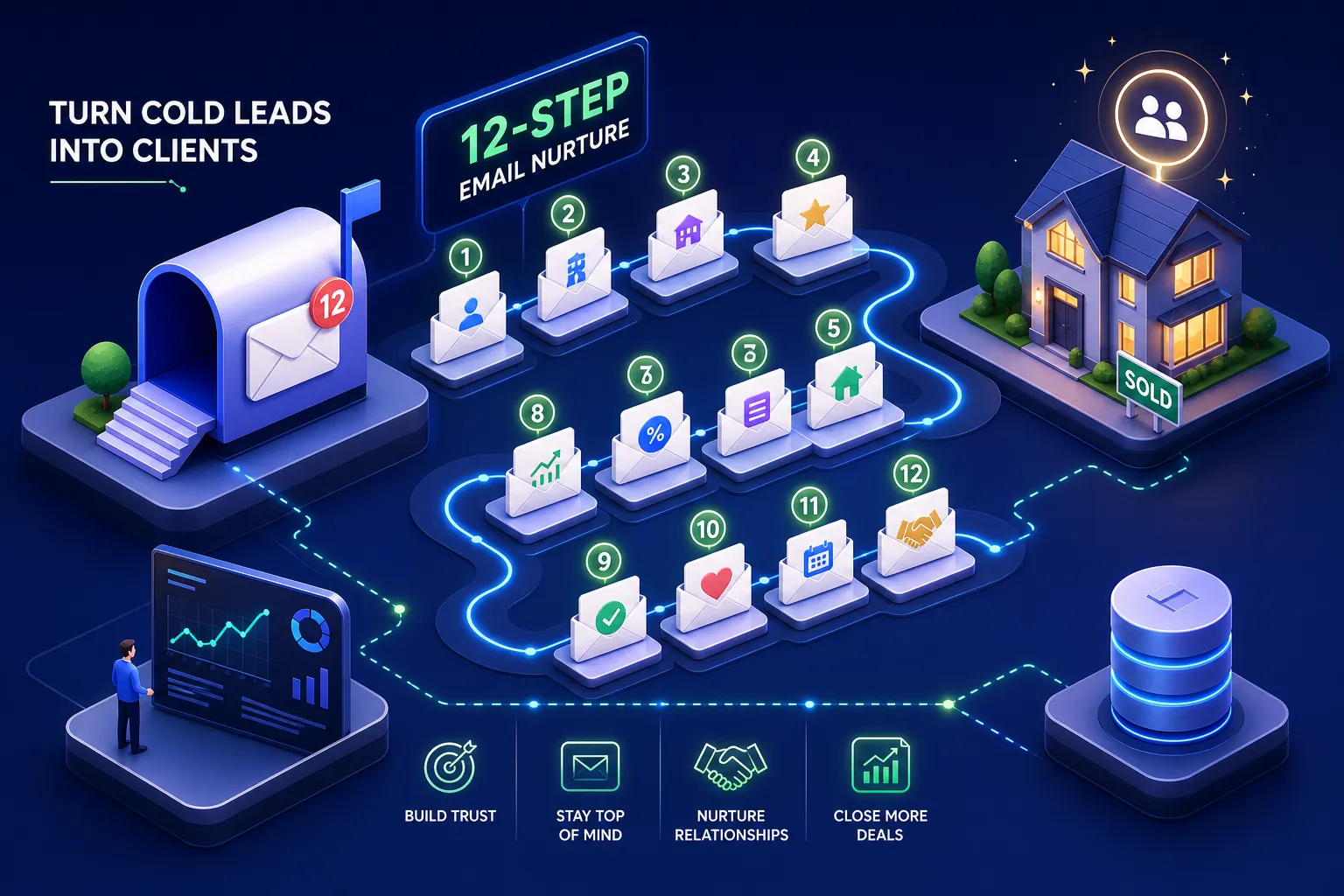
The seminar-to-consultation funnel is the use case most CRM comparison articles miss entirely. Seminar-based lead models need RSVP capture, no-show re-engagement sequences, multi-touch nurture between attendance and booked consultation, and pipeline stages that reflect a longer relationship-driven sales cycle. An attendee gets an immediate follow-up with a booking link. The no-show gets a "we missed you" email within an hour, then a re-engagement sequence over the following week. Long-cycle prospects enter a slower educational nurture that runs for months. HubSpot and Salesforce FSC handle this well with the right configuration. The setup matters more than the platform label on the box. For a practical roundup of options focused on financial services, see some of the leading CRM comparison articles for financial services.
What CRM implementation actually costs in financial services
License fees are only part of the story. Entry-level platforms like Redtail run $39 to $59 per user per month; Wealthbox runs $59 to $75; Zoho starts at $14. Mid-tier platforms like HubSpot range from $20 to $150 per user per month. Enterprise options like Salesforce FSC start at $325 and can reach $700 per user per month with full add-ons. These are license costs only, the implementation is a separate line item most firms fail to budget for. (Pricing reflects current vendor tiers as of mid-2026; verify directly with each vendor before finalizing budget projections.)
The real sticker shock lives in implementation costs. Salesforce FSC builds typically run $50,000 to $200,000 for configuration, data migration, training, and integration. Even mid-tier CRM builds require custom workflow setup, compliance configuration, and integration with custodians and financial planning tools like RightCapital or MoneyGuide. Most firms budget for the license and forget the build, then wonder months later why the system isn't performing as expected.
A properly scoped implementation covers CRM configuration, automation sequences, pipeline stage setup, data migration from the old system, integration with existing tools, and team training. To put it concretely: a firm that skips data migration scoping often discovers mid-project that legacy records need manual cleanup, triggering change orders that can add weeks and significant cost. If your implementation partner isn't scoping all of this upfront, you'll be paying for it in change orders later.
The compliance trap that stops financial services firms from automating
Many financial services firms avoid automating follow-up entirely because they're afraid of getting it wrong. That fear is valid but miscalibrated. Consider the alternative: firms that skip automation entirely often experience significant lead leakage, with prospects falling through the cracks between touchpoints. The risk isn't automation itself; it's automation without proper consent capture, opt-out management, and audit-ready records. The difference between those two things is a setup decision, not a fundamental technology limitation.
TCPA-compliant SMS automation requires prior express written consent with specific disclosures: the business is named explicitly, messages are identified as automated marketing, consent is not a condition of purchase, and opt-out instructions are clear. Opt-out requests must be processed within ten business days. Messages can only be sent between 8 a.m. and 9 p.m. in the recipient's local time zone. For email, CAN-SPAM and applicable state regulations apply. For RIAs, FINRA's books-and-records guidance and SEC recordkeeping expectations require that all business communications be stored in a non-rewriteable format for five years, readily producible on demand. For specifics on consent language and opt-in mechanics, see this practical guide on TCPA opt-in requirements.
Compliance-safe automation is achievable, but only with a setup designed around those requirements from the start. Salesforce FSC with Shield and InvestGlass (a compliance-focused CRM layer for wealth managers) both include immutable audit logs, role-based access controls, and consent fields tied natively to contact records. Other platforms require configuration overlays to reach the same result. The question isn't whether you can automate. It's whether your system was built to automate correctly from day one.
Getting your financial services CRM fully operational without the guesswork
VELO builds fully operational CRM systems for financial services firms in 14 days. The scope includes:
-
CRM configuration tailored to your firm's structure
-
Compliance-aware automation sequences
-
Seminar-to-consultation pipeline setup
-
Lead routing rules and attribution dashboard configuration
-
Integration with your existing tools
The difference between a 14-day operational build and a 14-week consulting engagement comes down to one thing: a team that has built these exact pipelines before, knows the compliance guardrails for regulated industries, and doesn't charge you to learn the business on the job.
Platform-agnostic implementation matters more than most firms realize. VELO builds across GoHighLevel, HubSpot, ActiveCampaign, Salesforce, and Follow Up Boss, recommending the platform that fits the firm's size, compliance requirements, and budget, not the one with the best reseller margin. A financial services firm with 200 contacts and a seminar-based lead model has fundamentally different needs than an enterprise RIA managing thousands of households across multiple advisors. The right recommendation starts with understanding the business.
If you finished this guide and realized your current setup has gaps you haven't fully mapped, the next step is clear. VELO offers a free 30-minute pipeline audit that identifies the three highest-leverage gaps in your current CRM or lead management setup, with a written roadmap delivered within 48 hours. No pitch deck, no month-long discovery process, just a clear picture of where your pipeline is leaking and what to fix first.
The platform matters. The implementation matters more.
The best financial services CRM is the one that fits your sub-sector, handles your compliance requirements without turning your team into system administrators, and gets fully operational fast enough to stop daily lead leakage. For independent RIAs, that's often Wealthbox or Redtail. For marketing-driven advisory firms, HubSpot. For enterprise wealth management, Salesforce FSC. Those distinctions matter, but they're only relevant if the platform is actually configured and running.
A half-configured financial services CRM is just an expensive contact list. Financial services firms working with VELO go live with a fully built, compliance-aware system in 14 days, skipping the trial-and-error phase that derails most in-house implementations. If your current setup isn't performing at that level, book the free pipeline audit and find out exactly where it's breaking down.