Best CRM for Financial Advisors: A 2026 Buyer's Guide
This guide cuts through the noise. You'll see exactly which features matter for a regulated advisory practice, which platforms are worth shortlisting in 2026, how the pricing actually breaks down, and what the shift from manual follow-up to a fully automated nurture system looks like in practice.
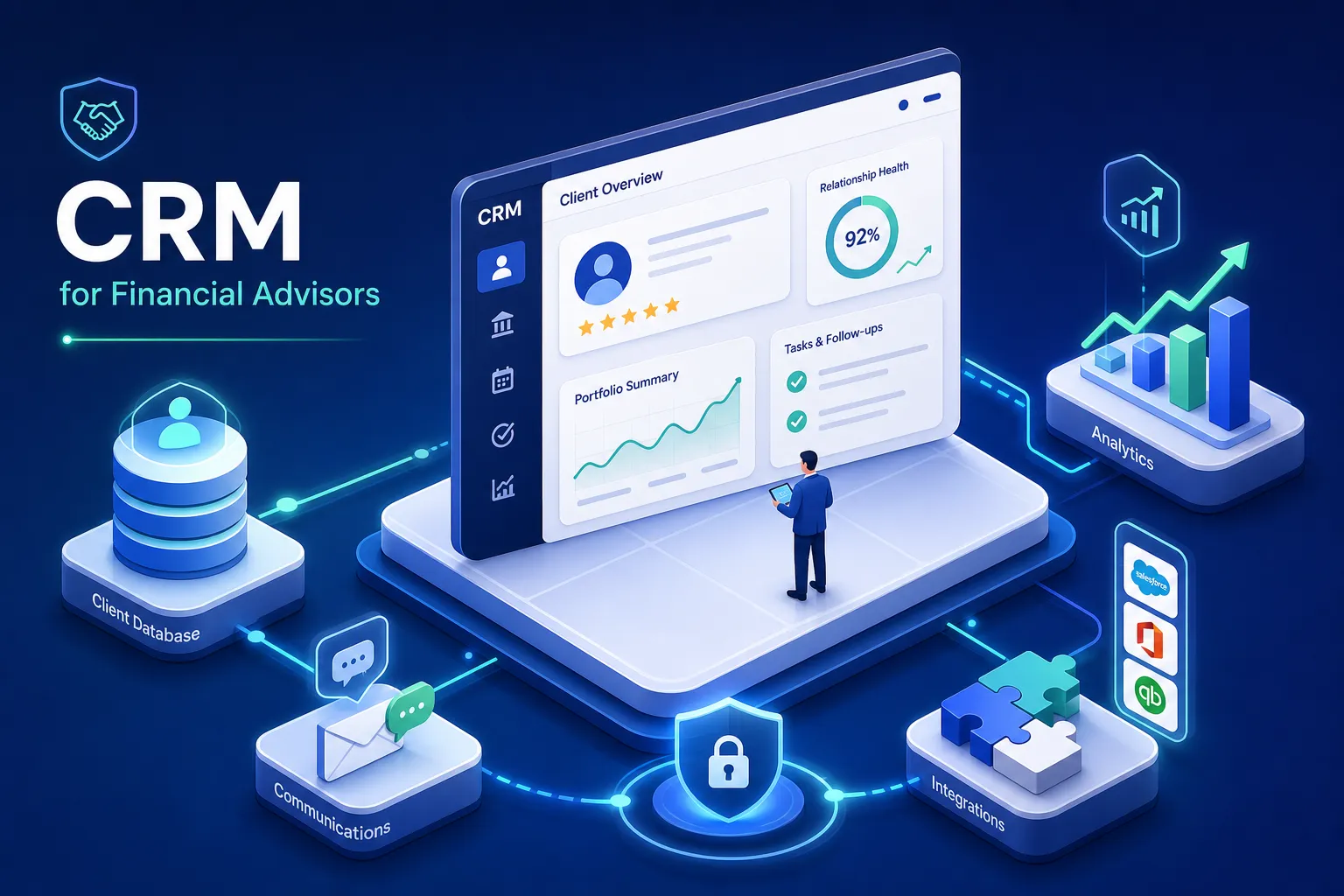
Most financial advisors use their CRM as an expensive contact book, and it shows. Selecting the right CRM for financial advisors means designing systems that support compliance, household relationships, and multi-year buying cycles, not just storing contact details. Leads sit unworked, and follow-up happens only when someone remembers. Compliance documentation gets reconstructed after the fact, usually right before an exam.
The problem isn't the advisor. It's that most CRMs were built for B2B SaaS sales teams, not for regulated practices managing fiduciary relationships, household accounts, and multi-year buying cycles. At VELO, a revenue systems agency that builds CRM infrastructure specifically for financial services firms, we see the same pattern constantly: capable advisors running a broken system that quietly bleeds qualified prospects every single month.
This guide cuts through the noise. You'll see exactly which features matter for a regulated advisory practice, which platforms are worth shortlisting in 2026, how the pricing actually breaks down, and what the shift from manual follow-up to a fully automated nurture system looks like in practice.
What a CRM for financial advisors must actually do
Generic CRMs were designed for teams selling repeatable products with short sales cycles. Financial advisory has fundamentally different requirements: longer prospect timelines, fiduciary accountability, multi-account household relationships, and a compliance layer that touches every client touchpoint. A CRM that doesn't account for those realities creates more operational risk than it eliminates.
The right advisor CRM manages the full prospect and client journey from first inquiry to ongoing relationship. It tracks where every lead came from, what stage they're in, what was communicated, and what needs to happen next, without relying on a human to manually update every field after every interaction. That's the baseline. Everything beyond that is a differentiator.
Household relationship mapping is where most generic platforms fall short. Financial advisors manage relationships at the household level, not the individual level. Spouses, trusts, multiple accounts, and referral connections need to be visible in a single view. CRMs that lack this capability force advisors into manual workarounds that break down under volume and create blind spots that become real problems during compliance reviews.
The compliance features that separate good CRMs from risky ones
For SEC and FINRA-regulated firms, a CRM isn't just a sales tool, it's a record-keeping system. Every communication, document exchange, and workflow trigger potentially needs to be defensible during an examination. Choosing a platform without evaluating this layer is one of the most common and costly mistakes advisory firms make when selecting technology.
FINRA's current requirements are unambiguous: all business-related electronic communications must be retained for at least three years, with the first two years in an easily accessible format, stored in WORM (Write Once, Read Many) format or in a system with a complete audit trail. In January 2026, FINRA fined a broker-dealer $750,000 specifically for failing to supervise business-related text messages. That's the enforcement environment your CRM needs to operate in.
Compliant archiving and WORM storage
Compliant communication tracking means every email, text, and meeting note is timestamped, attributed to a specific client record, and stored in a format that survives a regulatory examination. Redtail, via Redtail Speak, and Salesforce Financial Services Cloud both include built-in compliant messaging and WORM-compatible archiving integrations. Without these capabilities, advisors are building communication records in places that simply can't be audited.
Field-level audit trails and role-based access
Field-level audit trails matter just as much. These show who accessed a record, when they accessed it, and what changed. Role-based access controls ensure junior staff can't modify sensitive client data without oversight. These aren't optional features for regulated firms, they're the baseline, and any platform that can't demonstrate them clearly should be removed from your shortlist immediately.
Lead scoring and automated booking flows that actually move prospects forward
The biggest conversion leak in most advisory practices isn't the pitch. It's everything that happens before the first real conversation. Leads come in, get a one-touch email, and fall into silence because there's no system scoring their engagement level or routing them through a structured follow-up sequence. The advisor only follows up with whoever responds first. Everyone else evaporates.
Lead scoring in a wealth management CRM should track behavioral signals: email opens, page visits, whitepaper downloads, webinar attendance, and seminar RSVPs. A prospect who has opened three emails and visited the services page twice is fundamentally different from someone who filled out a contact form once and went dark. Your CRM software for financial advisors should surface that difference automatically and prioritize follow-up accordingly, not leave it to the advisor's memory.
In HubSpot, you can configure custom scoring models that assign points by demographic fit (company revenue, deal potential, job title) and behavioral engagement, then trigger workflows when a score crosses a defined threshold. A prospect scoring above 70 on combined fit and engagement can automatically generate a same-day call task, a Slack alert to the advisor, and a personalized email sequence, all without anyone touching a keyboard.
Salesforce Financial Services Cloud achieves similar results through Einstein Lead Scoring and custom Flow automation, with the added benefit of household-level relationship context throughout the scoring model. A compliant consultation booking flow connects the lead capture form directly to a calendar tool, triggers a confirmation sequence, sends pre-consultation materials, and fires a no-show re-engagement workflow if the prospect doesn't show. Every step should be automated and logged. Manual scheduling is where qualified prospects disappear from pipelines, and it happens at a scale most advisors don't realize until they audit their pipeline conversion rates.
Top CRM for financial advisors to shortlist in 2026
No single platform is right for every advisory firm. Firm size, compliance complexity, team structure, and existing tech stack all shape which CRM fits. Here's how the serious contenders break down.
Wealthbox ($59 to $99 per user per month) offers a clean interface, real-time activity streams, and direct Fidelity Wealthscape integration with single sign-on, bi-directional account data viewing, and automated account openings. It's built for modern independent practices that prioritize team collaboration and usability.
Redtail CRM ($99 per database per month with unlimited users) remains the most cost-effective option for small RIAs, with flat pricing that doesn't punish growth and quick deployment timelines that typically run under two months.
Advyzon combines CRM with portfolio performance reporting and billing in a single platform, making it the better choice for firms that want one operational hub rather than several loosely connected tools.
For firms with more complex marketing and automation requirements, HubSpot CRM is a fast-growing choice among advisory practices. It pairs a capable CRM with serious marketing automation, email sequences, behavioral tracking, and lead scoring that most purpose-built advisor tools don't match. The tradeoff is that it requires more configuration to meet financial services compliance standards, which is where a specialist implementation partner becomes valuable.
Salesforce Financial Services Cloud ($325 per user per month) is the enterprise-grade option among advisor-focused CRM solutions, with household relationship graphs, Einstein AI, deep custodian integration capabilities through Schwab OpenView Gateway and similar APIs, and extensive customization. Implementation costs typically run $15,000 to $50,000 and up, reflecting both the platform's power and its complexity.
For solo advisors or smaller practices looking for an all-in-one entry point, Altitude CRM has emerged as a purpose-built option with native AI (Pathfinder AI), built-in workflow automation, and marketing tools without requiring add-ons. It's worth evaluating for one-person or two-person teams before committing to a more complex platform.
From manual follow-up to automated nurture: what the shift actually looks like
The before state at most advisory firms is predictable. Leads come in from a seminar campaign or paid ad. Someone sends a templated email. If there's no response within a few days, the prospect gets a call when the advisor has time, or nothing at all. Thousands of dollars in marketing spend feed a pipeline that leaks from every seam because there's no system enforcing the next step.
Consider a firm running seminar campaigns generating 40 to 60 leads per event. Without a structured follow-up sequence, the conversion window closes within 72 hours for most prospects. There's no lead scoring to identify who's actually interested. There's no behavioral trigger for the prospect who visited the website twice after the event but didn't book. There's no 90-day re-engagement sequence for the people who went cold. The advisor only works the leads who raise their hand loudest. The rest is money left on the table.
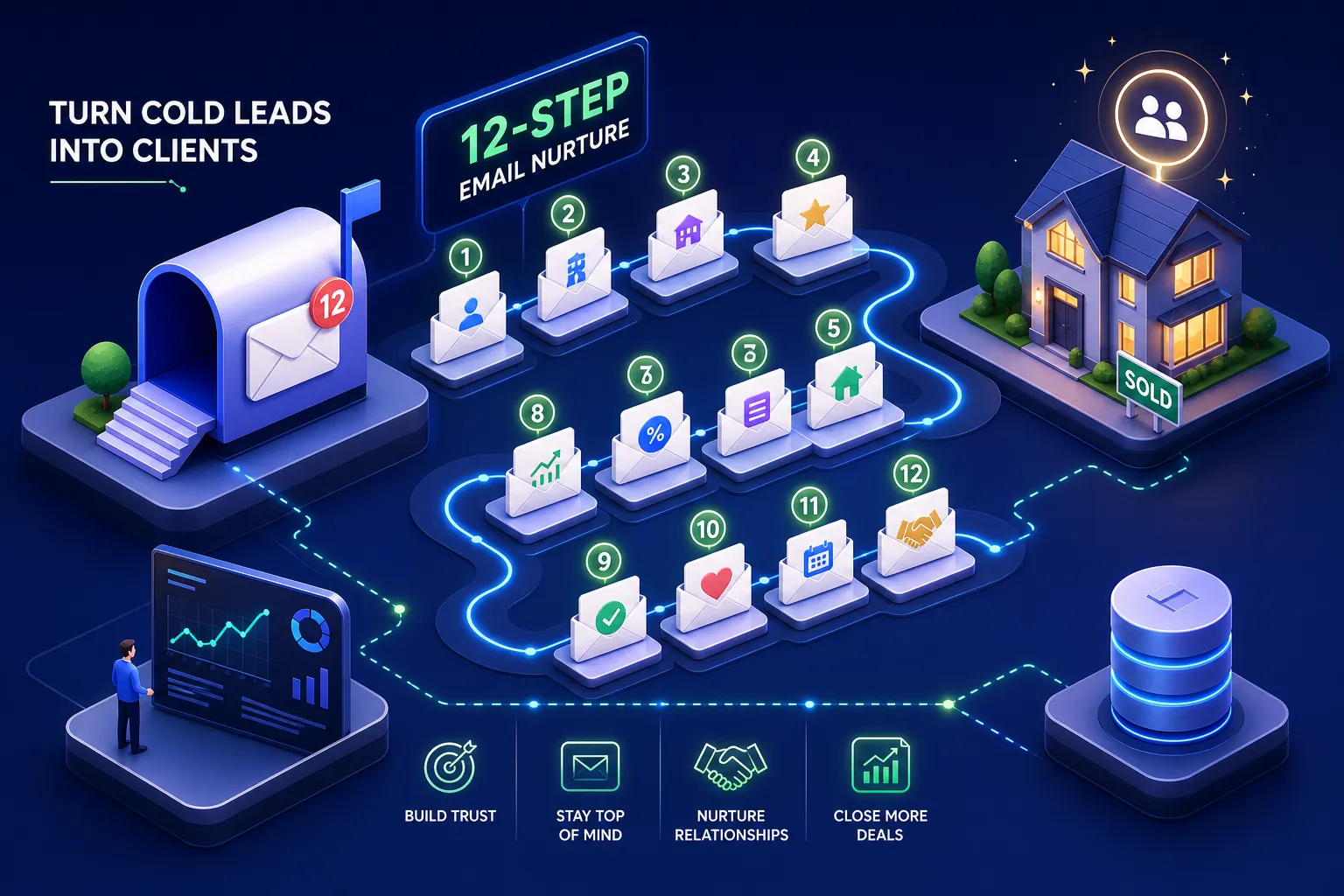
A properly built CRM system changes that outcome without increasing ad spend. When VELO builds client management software for advisors, the architecture includes FINRA-compliant email and SMS sequences with pre-approved templates, behavioral lead scoring that escalates based on engagement, automated consultation booking connected directly to the advisor's calendar, and a re-engagement sequence for cold leads that runs for 90 days without requiring manual intervention. The compliance layer isn't bolted on after the fact, it's built into the workflow from the first message. Across the practices we've built this for, booked consultation rates per marketing event routinely show significant improvement compared to the previous manual process.
How to shortlist the right CRM and take the next step
Choosing the right CRM for financial advisors comes down to three concrete questions. Does it handle compliance tracking without workarounds that create audit exposure? Does it support the automation complexity your actual pipeline requires? Can it integrate with your custodians, Schwab, Fidelity, Pershing, without a multi-month IT project?
When you're evaluating vendors, ask each one directly how their platform handles FINRA communication archiving. Ask what their native custodian integrations look like and whether those integrations are real-time or daily data pulls. Ask whether their automation workflows can be configured to fire compliance-safe sequences without requiring manual review for every trigger. Vague answers to specific questions are a reliable signal that the platform will require more workarounds than the vendor is willing to admit upfront.
On implementation timelines: most mid-tier RIA CRM builds take three to six months when done internally. A focused build through a specialist partner typically runs six to eight weeks and results in a system that's operational on day one rather than months into a learning curve. If you're not sure where your current setup is losing qualified prospects, a structured pipeline audit is the fastest way to find out. VELO runs a free 30-minute pipeline audit, written roadmap back to you within 48 hours. No slide deck.